All posts by Emma Vehviläinen

MSc graduate in Infectious Diseases and Immunology from University College London, now holding a position in Medical Affairs specialising in Cardiovascular Therapeutics at a pharmaceutical company in Cambridge.

We do not live in a plague-free world

A young girl is admitted to the intensive care unit, presenting with fever, chills and painful, swollen lymph nodes. A course of antibiotics is administered. After laboratory confirmation, she is diagnosed with an infection of Yersinia pestis. Or as most will recognise by its disease name: the bubonic plague.

The plague is not only an incendiary illness medically, but it can also provoke vivid imagery of mass graves and corpses dragged around squalid villages in the Middle Ages.

Taking a step back from these sensational and almost romantic images of the medieval pandemic (which killed between 25 and 100 million people in the 1340s), look again at the more clinical and prosaic case of the young infected girl. She likely contracted the bacteria from a flea bite during a hunting trip in a small county in Oregon. Sifting through the news and social media and conversing with friends and family, I was surprised by the surprise that was awakened in people by this case:

We still have the plague?

Yes, we do not in fact live in a plague-free world. The causative agent survives in fleas which live in small animals in the wild, serving as reservoirs for the infection. The plague therefore persists, circulating at very low rates in our environment. A bite from an infected flea allows for the bacteria to enter a human and travel through the lymphatic system to the nearest lymph node. Here it replicates itself and produces flu-like symptoms. If untreated, the infection can be rapidly fatal, with the World Health Organisation predicting a case fatality ratio of up to 60 percent. Fortunately, with early diagnosis, treatment with antibiotics and supportive therapy is enough to treat the infection.

Unexpected prevalence of the plague

Despite the shock in those I spoke to and what seemed like it subsuming media attention, this case in Oregon was not an aberration. Searching for “plague, 2015” online, all the search results that Google’s comprehensive algorithm produced on the first few pages yielded information only on this girl in Oregon. One singular case.

Between 1989 and 2003 there were 38,310 reported cases of the plague in 25 countries. As recently as 2013, there were 783 reported cases and 126 deaths (“reported” being the crucial word). The plague is a largely underreported infection, its diagnosis and confirmation is dependent on laboratory testing, involving actually identifying the bacteria under a microscope in a fluid sample. The three most endemic countries for the disease are Madagascar, the Democratic Republic of the Congo and Peru. Within these countries, the infection is rife in areas lacking the ability to perform this laboratory confirmation.

Perhaps providing more perspective on the media’s bias: there is an ongoing outbreak of the plague in Madagascar. 263 cases and 71 deaths have been reported so far; 263 cases that were not found in the Google search. The plague flourishes in countries with areas of high population density, rodent infestation, poor health care infrastructure and low hygiene standards. Madagascar is the country most severely affected by the plague, with an outbreak occurring almost every year.

Neglected diseases

Although there are a multitude of other diseases deserving perhaps even more consideration (such as trachoma or kala-azar, for example), the plague is a paragon of all of the diseases neglected by the media. Neglected diseases, like the examples just given, collectively affect more than one billion people in 149 countries.

As such with the plague in Madagascar, neglected tropical diseases also affect vulnerable populations living in inadequate sanitary conditions with limited access to healthcare. There lies the predicament: these illnesses attract little attention and funding but many of them are silent killers and causative agents of debilitating disabilities. I was completely unaware that trachoma is a leading infectious cause of blindness until I started researching this article. These diseases tend to be less sensational, like Ebola, as many do not feel personally threatened by them. Unless a case happens to occur in proximity to us in the developed world, such as our young girl in Oregon, a media takeover is not created.

While programmes and funds have been implemented to tackle these diseases, there are probably a handful of diseases that you have never heard of, affecting and killing people around the world. While Ebola and the unexpected infection of a young girl with Yersinia pestis are both relevant and medically paramount events, a coordinated global effort and media monsoon should be created for these forgotten and ignored diseases like the plague, too. It is about time we stop neglecting the neglected.
Uterus on loan: the final hurdle in fertility medicine?

A woman gave birth last year, many are not aware of the medical and emotional significance of this particular birth. The Swedish woman in question gave birth with the help of a transplanted uterus, loaned to her by a family friend. After decades of research and numerous attempts, this proved to be the first successful birth with a transplanted uterus; other attempts around the world having resulted in rejection of the organ.

It is beyond question a sweeping breakthrough not only in the field of organ transplantation but also in fertility medicine, you could argue that it is the biggest breakthrough in fertility medicine since IVF. In essence, we now have the capability to allow women who do not have a uterus—or have one that is not viable for pregnancy—to carry their own child.

In the UK, it is estimated that 15,000 women of childbearing age do not have a uterus. Countless other women have undergone radiation therapy for cancer and have been left with uterine infertility. For these groups of women, the chance to carry their own child is becoming more tangible as approval has now been given to perform ten uterus transplants.

The science explained

The first successful story in Sweden, with hopefully many more to come, saw a uterus transplant followed by a mandatory year of monitoring. This was done in order to ensure rejection would not occur and to allow for immunosuppressant drugs to be taken to further reduce this risk. After the pregnancy and birth, the uterus was removed.

Where did the uterus come from? The uterus was donated from a live donor. Although it may strike as different to the typical organ transplantations (coming, for the most part, from brain-dead but heart-beating donors), the Swedish trials used live donors. The main advantage being the extended amount of time for pre-transplantation investigations, such as the ruling out of infection or abnormalities that might make the uterus non-viable for donation. There are also better survival rates associated with live-donor transplants, such as the case with kidney transplants.

That being said, the transplants being performed in the UK will be from the classically characterised donors I mentioned. The reasoning for this is simply, or not so simply, that the procedure itself is already highly complex. There are substantial medical risks to consider, utilising classic donors reduces the number of surgeries. To avoid using technical surgical jargon about vascular pedicles, the veins of the uterus have very thin walls with several branches, making cutting and reconnecting a very difficult process.

Do the benefits outweigh the risks?

Uterus transplantation is an intricate procedure that bears medical risks. It is not a life-saving procedure: these women are otherwise healthy and the procedure does not prevent or fix illness. To many sceptics, it is plainly a non-vital transplantation, or in other words, it is a quality of life-enhancing procedure. These women still have the ability to become mothers, with certain financial requisites of course: adoption or surrogacy. I believe to many people debating the ethics of the procedure, it is difficult for them to visualize the perceivable benefit over the perhaps more tangible risk.

A face-transplant is not a medical necessity either, but by many can be identified as an operation that can greatly enhance the quality of life of someone severely disfigured. And here lies the issue: many can identify a face transplant as greatly impacting quality of life—giving someone a face is possibly more discernible to some in meeting the definition of quality more so than the temporary transplantation of a uterus.

For many women, not being able to carry their own child is psychologically gruelling, the procedure is an enhancement to the quality of life of these women. It is not solely a case of having children or not, but about experiencing pregnancy. I am not a mother and I do not plan on getting pregnant any time soon, but I am able to discern that it is a very real burden for many women.

With a transplantation that can eliminate emotional distress during an era in which we are increasingly adding to the expanding collection of transplantable organs, why the scepticism? We are now transplanting faces and hands and there is a body of evidence confirming uterus transplantation is viable. Why not alleviate suffering and let a woman consent to carrying her own child?

One father, two mothers: why are we resisting three-parent IVF?

There exists a heterogeneous group of diseases that affect many organ systems, like muscles and the central nervous system. Albeit rare, these diseases can sometimes leave children lucky to reach their fourth birthday. All of these diseases are caused by the same genetic malfunction.

These are called mitochondrial diseases and they are caused by a malfunction in the so-called powerhouse of the cell, the mitochondria, the part of the cell responsible primarily for energy conversion. You might remember this from biology classes in school, and you may also remember that another component of the cell is the nucleus. The nucleus stores the genetic material that makes you, you.

However, what you may not have known is that the mitochondria actually have its own genetic material, too, its own DNA. This DNA, composed of 37 genes, is passed down to you from your mother. While you receive your nuclear DNA from your mother and father—defining your personal traits—the mitochondrial DNA is solely there to make up your mitochondria in all your cells. The mitochondrial DNA is unfortunately very unstable and incredibly prone to acquiring mutations. It is these mutations that can cause the aforementioned devastating diseases. Many are not curable; however, all are now preventable.

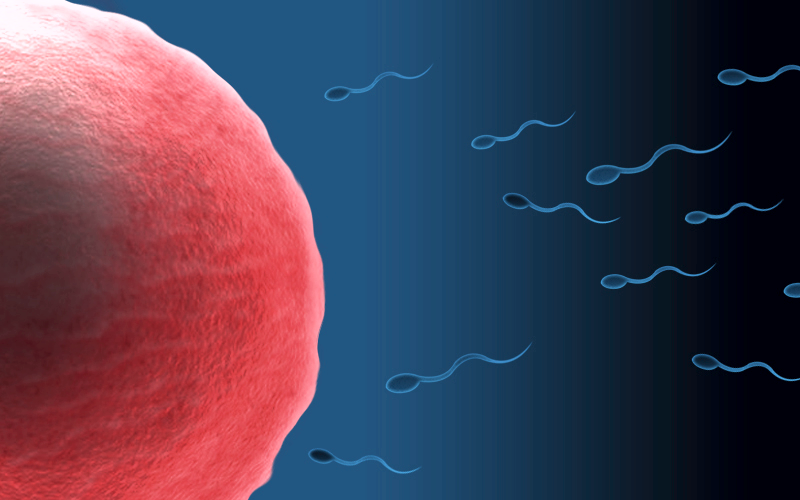
DNA from a man and woman plus one set of healthy mitochondrial DNA from a second woman

You may have heard of IVF—in vitro fertilisation—a fertilisation technique used since the late seventies where conception occurs outside of the womb. You may also be aware of the hype surrounding three-parent IVF, but do you understand what it truly means on a scientific and human level? With the advent of this new procedure, we are now able to use two sets of nuclear DNA from a man and woman plus one set of healthy mitochondrial DNA from a second woman. This has the capacity to prevent children from suffering these debilitating and eventually fatal illnesses. This year, the United Kingdom approved the use of these fertilisation techniques to prevent mitochondrial diseases from manifesting.

Doubt and ethics

As with any mention of tampering with DNA, comes the onslaught of doubt and ethical debate. One side of the debate argues that the technique can lead to dangerous and unpredictable results. I argue that not using these techniques can lead to equally dangerous results: the suffering and early death of infants, deaths that are ultimately preventable.

Based on meticulous and highly regulated studies, a law was passed in an effort to regulate the techniques used for three-parent IVF. I also argue that as the Human Fertilisation and Embryology Authority (HFEA), Britain’s fertility regulator, will be scrupulously vetting and approving clinics to use these procedures, it leaves little leeway for dangerous results.

So then comes the eugenics debate. As I mentioned, editing the human genome is a touchy subject. Some believe legalising forms of it could lead to selective breeding. However I would like to point out that in a therapeutic context, such as three-parent IVF, it is currently being used and developed in research facilities globally. We have (for years) been editing our DNA to enhance our own immune cells in the fight against certain cancers, a field of research that is not being equated to eugenics. Although, since the current DNA modifications I am talking about result in a brand new human beings, it is a much more sensitive topic (I suppose).

Oversimplifying science

I believe this sensitivity arises, at least in part, from ignorance and over-simplified media coverage. Calling the product of three-parent IVF a genetically modified baby is somewhat of a stretch. It needs to be made clearer what this technique actually entails and what impact it really has on the genome of this brand new human being. The mitochondrial DNA in question does not determine any traits; it makes up for a tiny fraction of a person’s whole genome, less than 0.2 percent. Modification of nuclear DNA, the DNA that determines traits, is still banned.

I would then like to elucidate that the genes themselves are not being manipulated in this IVF procedure. Rather, a healthy set of mitochondrial DNA is being transplanted from the “third parent.” I am using quotation marks for the “third parent,” as a contributor of less than 0.2 percent of the genetic makeup of a baby—genetic makeup that does not provide any characteristics or traits—claiming all three contributors, or parents, are providing DNA in equal quantities is false.

Furthermore, if we are referring to these babies as having three parents, should the same not be applied to those born from a surrogate? To clarify, with a surrogate the genetic material to form the baby is from two people, but an intrauterine environment in the surrogate also has significant effects on the baby’s health and development. Therefore, if we use such simplified language for preventing mitochondrial diseases with IVF, why is the same not applied to other fertilisation techniques?

Science coverage in the media can be dangerously over-simplified and even misleading, resulting in ethical debate. Transplanting mitochondrial DNA to create a baby free of mitochondrial disease absolutely not a simple procedure. But if I were to ask you: if you had the opportunity to prevent the suffering and early death of thousands of babies with a regulated and approved procedure, would you approve of it? I would hope your answer was a simple ‘yes.’ After all, if the ethics behind performing a heart transplant to stave off death are not questioned, why should the ethics behind the transplant of mitochondrial DNA be?

Light in the foggy field of HIV treatment

Today a positive HIV diagnosis is not necessarily a death sentence. Tentatively we can now define HIV as a chronic disease rather than a fatal one. HIV treatment, or management of the virus with appropriate and timely therapy, can keep deadly secondary infections and disease at bay.

Of course I say this prudently as many are not fortunate enough to afford antiretrovirals, the current and only therapy option. Antivirals are also importantly unable to completely clear the virus from an infected individual. Thus rendering HIV a life long burden.

Thus it is obvious to us when scrolling through the news and medical journals that ‘cure’ and ‘eradicate’ are used cautiously in the field of HIV/AIDS research. It is not to say that hope and possibility do not exist, but they are blurred by the genetic and immune complexities involved in targeting the virus.

HIV possesses the ability to change its genetic makeup rapidly, making it arduous for human immune systems to keep up and produce the appropriate antibodies. The virus is also skilled at hiding, exacerbating the difficulty in targeting it. Recently though the media has shone a light through this haze, by using words like “solution” and “promising” after the publication of a prospective breakthrough in March this year.

New hope

3BNC117 is this new hope. 3BNC117 is a highly powerful antibody produced by the immune systems of only a small fraction of individuals infected by HIV. It has a potent ability to restrict the replication of a wide array of HIV strains, solving the problem of the immune systems disability to keep up with genetic changes.

Researchers in New York cloned these antibodies and infused large doses into 17 HIV positive patients. As published in Nature, the antibodies were found to be safe and highly effective, the antibodies boosted the patients’ own immune systems. This lead to a monumental decrease in the amount of HIV in the blood, a phenomenon demonstrated for the first time in human beings. A phenomenon that also made me more hopeful in seeing HIV further redefined from a chronic illness; these promising results are now abound with possibilities.

Cue the numerous thoughts starting to creep through my head: could 3BNC117 be used along with current treatment be effective in eradicating the virus in an infected individual? Could the antibodies be used as markers to find HIV hiding inside a patient’s cells? Finally, could 3BNC117 be used as a preventative tool, perhaps as part of a vaccine against HIV?

Caution required

It is however far too soon to hail these antibodies as the cure-all and end-all of HIV. I believe these results must still be gauged with some caution. Many different factors must still be taken into account, not to mention the years it requires to develop upon and polish novel therapies.

Of perhaps even greater importance is the necessity to draw focus on issues with our current therapy options. Undetected cases, disadvantages in access to drugs and stigmatisation are all prevalent. The World Health Organization estimated in 2013 that a mere 37% of HIV positive adults were receiving treatment. The CDC reports that persons unaware of their HIV infection are responsible for nearly one in three of the ongoing transmissions in the United States.

A cure for HIV would be a landmark in medical history, but without knowing whom to cure it would be superfluous. Many communities are still plagued by stigmatisation, as risky behaviours such as injecting drug use are associated with HIV transmission. It is therefore equally crucial to normalise a positive HIV diagnosis. Advocating governments and health authorities to expand upon initiatives to address stigma and psychological issues, which are hindering people from seeking testing for HIV, is a promising step. Without this step, these promising headlines of a cure are meaningless.

Cure and eradication are crucial goals to strive for, but focus must not be taken away from the socio-economic issues HIV/AIDS also harbours.