With up to 15 million people in the UK currently suffering from chronic diseases, it is a wonder how the NHS has not come to a stand still trying to cope. As we all know, the NHS is not perfect but when looking at the number of people who rely on it, day in and day out, we see its necessity. However, its function serves as a safety net for todays current lifestyle while the important question of “How can I prevent chronic disorders?” is largely ignored.
The health conscious do their best to fan the flames of social change but the figures still rise with 2.9 million people predicted to have three or more long-term conditions by 2018. A survey done by the Department of Health in 2006 shoes that chronic disorders increase in people that come from a lower socio-economic group. If affluence and better access to education is what it takes to lower these figures, then why is more not being done to educate. By 2018 it is thought that the additional expenditure in health and social care will rise to £5 billion. I am no economist but that, in my eyes, is a lot of money which could be reduced with the following steps.
Food
Whether or not you are a ‘foodie,’ everyone loves food. Its role as a necessary part of life is generally overlooked, shelf life and taste is often prioritised over nourishment. The healthier options generally cost more and therefore only available to those in a higher socio-economic bracket. In today’s society, I am stating the obvious. Of course better food costs more; but when looking at food consumption from a health and not a business point of view, the general consensus seems nonsensical.
Words such as organic, free-range and natural, which promote good health, also come with a price tag. It is common knowledge that if you buy organic foods, you are going to be spending more on your weekly shopping. The Maine Organic Farmers and Gardeners Association showed that you could be spending over 100% more on certain items such as yoghurt, cheese and beef, if you purchase organic foods. This increase in price automatically makes healthier foods more inaccessible to those in a lower socio-economic group thereby forcing them to eat food that in the long term will cause chronic diseases.
Education
A healthy lifestyle should start from birth but the fundamental lessons that we all should be learning have been lost. The necessity to learn information and undergo standardised testing in order to live a ‘comfortable’ life has completely overshadowed exactly what is needed to live a long and healthy life. Learning how to exercise, to eat and to rest all play a vital part in creating a healthy well rounded human being. A study by the School and Students Health Education Unit shows ‘Less fresh fruit and vegetables are eaten as pupils get older and up to 24% report eating 3 portions of fruit and vegetables. 16% of 14–15 year olds and 27% of 10–11 year olds report eating 5 or more portions of fruit and vegetables ‘yesterday.’
This backward correlation shows the general trend of eating habits generally. As we get older we tend to eat what we want as opposed to what is good for us. What is good for us is demonised and made to be a chore to eat. I argue that the opposite should be the case. Better access to healthier foods and an education showing the benefits of a healthier lifestyle will bring down the cases of chronic diseases. As we get older, what we should want to be eating is what should be making us stronger.
Burma, Jordan and Peru are all quite different countries: they are in completely different parts of the world; are composed of a varying number of different ethnicities; and all have different population sizes. What they do have in common, amongst other things, is that they are all regions that have experienced conflict and violence.
The question was drawn to my attention in conjunction with the upcoming 30th anniversary of the UN’s International Day of Peace, occurring the 21st of September 2014, a day committed to “strengthening the ideals of peace, both within and among all nations and peoples.” Conflict Kitchen, a pop-up restaurant in London serving food from solely from regions who have experienced conflict and violence, has the goal of sparking dialogue revolving around the countries themselves, their histories and prospects of peace. Originating from the United States, it provides food whilst subtly encouraging conversation around these sometimes-sensitive topics. People are not always current with goings-on around the world and these opportunities can be used as an educational tool. After all, it is not unheard of of a conflict being resolved over a somewhat casual bite to eat…
War seems about to break out
Alexander Feklisov (AKA Aleksandr Fomin)
During the Cuban Missile Crisis, John Scali met Soviet infiltrator Alexander Feklisov (alias Aleksandr Fomin) for lunch. Their conversations revolved around weapons and the very real threat of an impending war. The topic of conversation ultimately leaned towards a diplomatic solution to end the crisis. This secret meeting is generally attributed to the start of the resolution of the crisis—a powerful allegory, albeit a little anecdotal for this article. Food can encourage dialogue between different cultures and in this situation peaceful dialogue resulted in agreement between conflicting sides.
Dialogue and conflict resolution
Set your sights on the resolve can be fruitless; aiming towards discussion rather than resolution can result in a deeper understanding of the other side. Padraig O’Malley, an Irish peacemaker, applied this idea when mediating Iraqi talks in 2008. His goal was not to bash out a resolution overnight, but rather to get all participants talking, introducing a human proximity and comprehension of why the conflict exists.
Intercultural dialogue [is] crucial in preventing and ending conflicts
Dialogue and discussion are by no means fix-all tricks, but the role of dialogue can be pivotal in conflict resolution. Out with the political epicentres of conflict, discussion can at least help raise awareness. Why are there conflicts in Burma, Jordan and Peru? When did they start? Discuss.
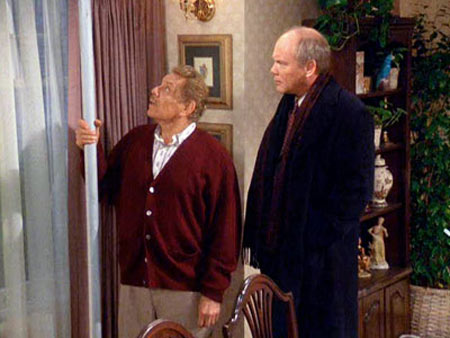
In a season 9 episode of Seinfeld, George’s father Frank resurrects a holiday from George’s childhood called Festivus. Among other things, Festivus rejects the gift-giving aspect of many holidays. Frank Costanza may have been onto something.
Around Christmas time, the media will report excitedly that a certain amount of money has been pumped into the economy because of higher consumer spending. While this dollar estimate may seem like only good news, looking behind the numbers reveals a less rosy picture. The gift-giving surrounding Christmas and other holidays can be viewed as a loss in value to society from an economist’s point of view.
Consumer Choice
Anytime you go online, go to a store, or browse through a shopping magazine, you decide to buy something only if you value the item(s) at equal or more to the price you’d pay. If you think you could spend the $20 for a widget on better things, you wouldn’t buy the widget. Yes—you can buy impulsively, be under the influence of an illicit substance, or act in an otherwise irrational manner. But generally speaking you’re only going to buy that $20 widget if it’s worth $20 or more to you. This seems self-evident. Less obvious is that how much you value the widget isn’t widely known public information.
When someone goes to buy a gift for you, they’re taking an educated guess at how much you value an item. They have imperfect information about how much you value something. They could be buying a $20 item that you actually only value at $10. That $10 difference is what economists call deadweight loss.
Evidence
Joel Waldfogel at the University of Pennsylvania surveyed different populations to find out the difference between the cost of gifts people received and how much they valued those gifts. Waldfogel found that in general 10–33% of value is lost in gift-giving transactions. Because of this massive amount of destroyed value, Waldfogel has referred to Christmas as an “orgy of wealth destruction.”
How much that difference is correlates highly to the magnitude of imperfect information. The people who know you the best have the best sense of how much you value things. On one end of the spectrum, you have someone’s spouse or significant other. This person is most likely to know the gift recipient’s interests, needs, and daily routines. There is likely the least amount of imperfect information in this case and the lowest amount of wealth destruction. A step down from this is close friends and family; they know the recipient fairly well but there’s still more room for over-valuing a gift. On the other the end of the spectrum—where value goes to die—lies the office Secret Santa exchange. In this scenario people are compelled to buy gifts for people they barely know. The overall lesson, from an economist’s point of view, should be to minimize the level of gift-giving on this end of the spectrum.
Not all economists agree with Waldfogel’s idea of Scroogenomics. People give gifts for reasons other than purely utilitarian ones and these shouldn’t be dismissed. Sentimentality—“it’s the thought that counts”—is of course a significant value in many exchanges. But this sentimentality is partially captured in Waldfogel’s surveys. Additionally, there’s a positive correlation between the level of sentimentality and the accuracy of the gift-giver’s valuation; a gift from a spouse will mean more to the recipient than a gift from the randomly assigned office co-worker.
Gift-giving is also a method of ‘signalling’ a giver uses to show the recipient how much he/she cares and well he/she knows the recipient. The diamond ring shows the level of love the giver has (apparently?) for the recipient but more importantly the choice of ring is a signalling device to the recipient as to how well the giver knows him/her. Signalling then could be a value of gift-giving Waldfogel fails to quantify in his results. Or, an argument could be made that it’s an explanation for why we give gifts the way we do today, even if there are much better ways to signal to others how much we care for them.
Larger Implications
Money is the closest gauge we have to putting a number on how much we value something. But spending $20 on digging holes just to fill them back in again doesn’t mean we are $20 richer in our well-being—even if it means our GDP went up $20. This fact should be considered whenever we see government spending has increased our output by a reported amount. Arguably, there are reasons to think government spending makes up for a loss of aggregate demand in the macroeconomy. However, this spending always involves a certain amount of imperfect information on how much individuals actually value things. If the government spends money on a Bridge to Nowhere or bails out companies that we don’t want, there is value destruction. Gift-giving around Christmas time increases the dollar amount of consumer spending but the level of value added to the economy is much less than this spending.
Many economic transactions involve the same sort of imperfect information found in gift-giving. An argument can be made that others will know better than the recipient for how he/she should value something. However most of the time, money is most efficiently spent when the recipient is the one doing the spending. This logic has been the inspiration for recent charitable projects like Give Directly. (Giving cash instead of specific items also works to lower overhead and give as much money to the recipients as possible.) How individuals spend their money reveals their preferences rather than assuming we as givers know what they need the most. The effectiveness of these charities for individuals in developing countries is currently inconclusive but early evidence suggests promising results.
What Could We Do Instead?
Waldfogel has a few suggestions on how we can improve on the level of deadweight loss associated with gift-giving. The first is to just give cash. Cash has this amazing power of giving people the power to exchange it for pretty much anything they see fit. It might not be romantic and it might not look good underneath the Christmas tree, but there certainly is no orgy of wealth destruction. Another option is gift cards. Gift cards could have a small amount of imperfect information; I remember getting a Best Buy gift card as a young child when I was nowhere close to being in the market for electronics or even to buy a CD. But gift cards give enough flexibility that the destruction of value in gift-giving can be significantly minimized.
This takes away the excitement of gift-giving but it could be just because we’re used to the status quo of gift-giving. There are many gift exchanges in modern society that follow purely practical guidelines. Wedding and baby registries, for example, tell gift-givers exactly what the recipient needs. The next time a birthday, holiday, or office exchange comes around, think twice before you buy a gift. Put some money in an envelope and know you are doing your part to minimize the orgy of wealth destruction that is running rampant in modern society. Or give money to The Human Fund.
Social phenomena rarely affect this author. Rather on purpose, I attempt to stay relatively disconnected from cutting edge technology—somewhat in part due to the fact I am about as useful with computers as Putin at a PRIDE Parade. However, one thing even I have not been able to avoid is the expansion of the all-consuming “social” media addiction. An addiction to anti-social media.
Online Life
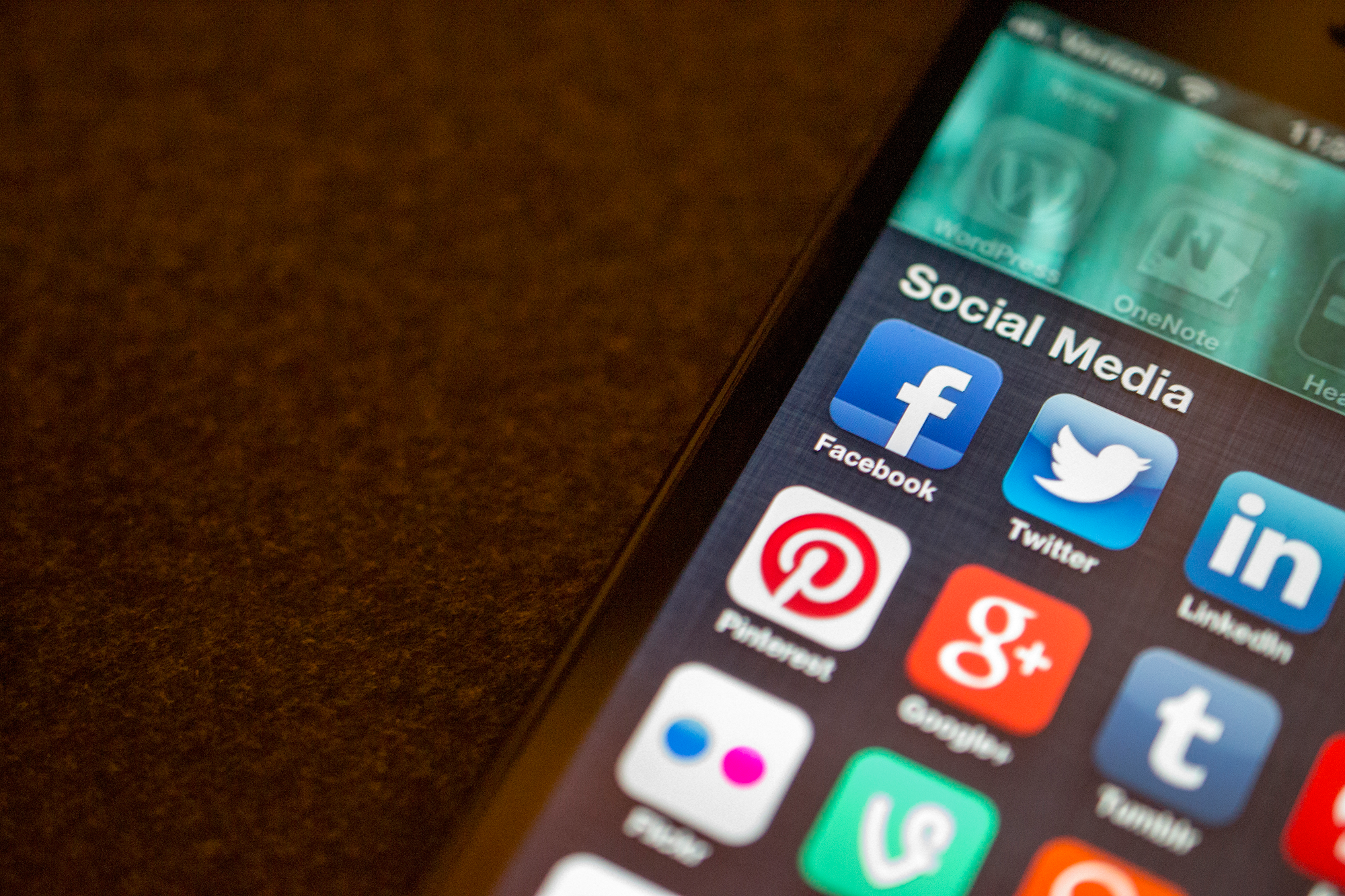
How often do we hear the phrase “oh sorry, I don’t have a *insert any popular social media site* page…” anymore? We are suspicious and scarcely believe these people can actually exist when that sentence is uttered, checking over our shoulders for Witness Protection Supervisors or Undercover KGB Agents homing in on their target. Online personal profiles have become almost an obligation at birth—some even creating pages on behalf of unborn kids—becoming a general requirement to appear normal. 74% of American adults are now connected to some form of network. Worse still, an aunt of mine—the most gregarious, friendly and chatty person I know—has recently become addicted to online stalking, often reducing her to a passive, though iPad-wielding, piece of furniture during family gatherings.
But the most disturbing experience I have had with the phenomena occurred with my two young cousins. Two girls aged 10 and 7, they are so bright, energetic, and joyful and have been brought up in a loving environment with a healthy, active family around them. Working means I do not get to see them often, but when the rare opportunities arise I get excited at the prospect of once again spending time with them.
Arrival at their house is met with the usual greeting: screaming, hugging, almost all before the doorbell was released. On a lovely warm summer day, I was dragged into the garden to play with them and their friend from school. In my day (I hasten to add I don’t like being able to use that un-ironically), playing in the garden would involve footballs, tree climbing, making up random athletic challenges and digging holes. Gender stereotypes would not apply at that age, my childhood friends of the opposite sex would be just as muddy and bruised after a hard day’s playing.
However, this time, I was ordered to sit as they fashioned something out of miscellaneous craft items. Handing it to me, I was confused. A piece of paper folded in half with my name on it, inside was a strange grid pattern containing the alphabet… what was this contraption? A shift/caps lock… the picture becomes clearer. Three squares with “Facebook”, “Temple Run” and “iTunes” written on it. My immediate thought was “man, these kid’s games are getting so much more complicated these days…” harking back to memories of classmates making convoluted diagrams which, when matched with a self-picked series of numbers, promised to map out your destiny.
It became clear, I was informed that this was my “laptop” for the day. The girls swiftly whipped out their own multi-coloured versions of the same. So there I was, in the garden on a sunny day sitting with 3 girls whose collective age was lower than my own, staring at paper computers. In a moment of confusion, my next thought was “wait, this isn’t a QWERTY keyboard…”. This was before a sombre resignation began to creep into my thinking.
My unease was not helped by the next part of the day, a role-playing activity where I was to play the new boy at school, complete with new paper laptop and make-shift briefcase (yes, my 10 year old cousin had made me a briefcase wanker). Proceeding to talk in dodgy Californian accents about being “the most popular kids in school” with “a bagillion-million twitter followers,” referring to each other by twitter names and using “hashtag” in verbal conversation, my cousins were in their fantastical element. Further references to posting seflies with the new kid on Instagram and judging people for “bad tweets” followed, along with a disconcerting yet insightful explanation of how having more than one twitter account allowed more total followers.
By this point I was disappointed. Firstly, because my 7 year old cousin knew more about this than I did. But mainly because, through the brief interactions of that afternoon, I realised the extent to which social media and technology have enveloped the lives of all of us, and none more so than the kids. My cousins were still joyful and creative, but I was very aware of the implication: a developing addiction to “social” media and technology.
Emoticons
That afternoon, I had an insight into how kids no longer value themselves highly on academic and athletic achievement; talents and skills; or the companionship of friends and family. Instead the primary indicator of a successful life at that age has become the number of twitter/Instagram followers, how many “likes” a post about your breakfast gets, or the aesthetic quality of a profile picture. Through uploading content and posts, they can create the ideal image of who they’d like to be, an air-brushed version consistent with the world of celebrity, but not with the real world and real interpersonal relationships. Communication between the children online is free of intonation, so important in developing transferrable skills for the future, and the absence of inhibitions online can lead to harsh words where tact would have been used face-to-face.
Emoticons replace real emotions. A friend and I recently discussed what would happen if everyday face-to-face interactions replicated online interactions, but then realised that we have rarely ever said a sentence before proceeding to wink and/or stick our tongues out afterwards… Instagram is littered with selfies and Twitter is awash with banal proclamations coming from children (and adults…) who do not know any better. There is absolutely a demand for this supply whilst they continue to place so much emphasis on their cyberselves.
Although the effect on children is the most concerning aspect for me, the ill-effects of “social” media addiction is obviously not confined to them. Take a walk around most offices of modern day multinationals, to one of which I belong as a robotic employee, and it’s a similar story. In an open plan office, where you sit no more than 2 metres from another human at any time, all eyes are glued to a screen as if hypnotised. Instant messaging and emails are used where a call or face-to-face conversation are available. We are even being advised to use “professional social networking.” The result? An eerily silent workplace where people tend to have better relationships with their hardware than the colleague across the way.
Don’t even get me started on the scene in any public transport, where people can be blissfully unaware of where they are due to the glue that holds their eyes to their screens. And the less said about checking a smartphone mid conversation, the better.
Adults, too, use “social” media to project the ideal image of themselves, with filtered photographs, well-considered comments and carefully chosen associations. Although the triviality of statements from altogether-too-frequent posters on my own Facebook is mind-numbing. It goes back to the clichés: does anyone really care that you washed your cat? Does anyone want to know that you made too much veg for dinner? If you slept through your alarm or missed your bus, move yourself to work instead of stopping to blurt virtually it blurt out to the world. Any case of people being fired from work or in trouble for causing offence because of a social media interaction will get no sympathy from me, as it should be unfathomable to deny that the process is consider-think-post, and not the reverse.
The worst part of all of this is that it is not a fad. “Social” media is here to stay. Reports may indicate that Facebook growth is stagnating in certain age groups, but it is still expanding and penetrating our lives. Further, like a parasite, it will continue to feed off the demand for more, pervading even more aspects of our life.
Life in 2024
Imagine a refrigerator that posts directly to Facebook what you have removed in much the same way Spotify can show your questionable music tastes: “Dave has just eaten 14 Aero Chocolate Mousses, 2.42am.” Imagine a store that automatically checks you in wherever you go- “Craig was at BOOTS buying CONDOMS and HAIR-REMOVAL CREAM, #expectingabignight.” Imagine a world where humans have lost their natural sense of inner-monologue, and so all thoughts, however inappropriate, mundane or controversial are spurted out into cyberspace as second nature: “Man sitting across from me in the bus is wearing a funny hat #lol #hadtobethere #whythefcukwouldanyonecareaboutthis?.” This already happens.
I am not naïve enough to think “social” media is going to go away. I wouldn’t want it to, as it’s a great way to keep in touch with loved ones around the world, and to organise the odd event (maybe). However, the further we go down the route or reliance on virtual interaction, the more we will lose the real definition of what it means to be “social” as human beings. The success of humans as a species is fundamentally based on our social skills, allowing us to collaborate and problem solve, and to develop relationships to continue the species. We thrive on interaction with our fellow man, learn from them, take great joy from them. Some may say full investment into “social” media is the logical next step for humanity, but I disagree. Is it now acceptable to be “social” by locking yourself in a room alone with your computer on? I think not. We must find balance.
Irony, Venting
Some may also say this is a frustrated and bitter attempt to vent at my lack of technological skills. I might also add in my irrational fear of the plot of Terminator becoming a reality when someone creates something a bit too artificially intelligent #SkyNet.
No. This is a small attempt to highlight a culture that we are all falling into, perhaps without even realising. If there has been this much change for the worse in just one generation between my cousins and I, then imagine where the slippery slope could lead. Visions of family dinners in the future where not a word is uttered, and no-eye contact is made, except with the reflection of self in the smart phone screen.
However I strongly believe that, as a society, we need to ensure that “social” media is incidental to our lives, and not the main purpose. We need to set the example and make this clear, especially for the younger generations. All we need to do is simple: be the change we wish to see in the world.
A point of contention sometimes makes itself known when writing an article: do you write content honed towards manipulating the SEO over-bearers, increasing the chances that it will be discovered; or do you write well written content that risks being buried, never to be seen? The two choices unfortunately rarely coincide. With the popularity of Buzzfeed and its clones, it’s not too surprising either.
SEO-friendly content consists of short, stubby sentences that will be picked up by search engine behemoths trawling the web. The content is then given a readability score by a variety of tests, such as the Flesch-Kincaid tests. The easier the readability, the higher the score (and the higher the content appears in search results).
What are the Flesch-Kincaid tests?
The Flesch-Kincaid tests are two examples of readability tests. Their aim is to define the readability of a piece of text based on its sentence length, word length and number of syllables. It determines just how complicated and difficult a piece of text is to read. Generally, you do not want to write content that is too sophisticated for your readers.
Raise the readability score
Using the different formulas it can be relatively clear using shorter sentences composed of shorter words will attain a higher readability score.
“Utterly famished, he contemplated the possibilities of concocting an excellent potage”
— Score: 11.1
“Hungry, he thought about making soup”
— Score: 73.8
These sentences use completely different language but convey the same meaning. The important highlight is that writing style will change the readability score but not necessarily the quality of writing.
Should I use Flesch-Kincaid to judge my writing?
The reality is that writing for a high readability score was never really a point of contention. You may be ushered towards a more SEO-friendly writing style in more professional (read:hierarchical) situations but it is not necessarily a measure of how coherent, intelligent, correct, etc. your writing is.
The Flesch-Kincaid tests deliver a readability score that corresponds to age or school level, the important ages to take into account are 15 and younger along with their corresponding schooling level for the majority of people. Put simply, you do not need to adhere to a readability score to have writing of higher quality, different writing styles simply serve different purposes.
Simply write what you would love to read. That’s it.
Original viewpoint articles covering current events, culture, philosophy and debates on morality. Its mission is to present well-written and well-researched reports and stories to inspire conversation and retort.